

What is PMI?
- Lorenzo Hines

- Jun 23, 2025
- 2 min read
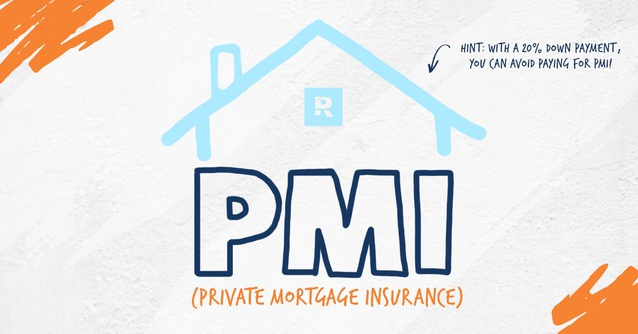
PMI stands for Private Mortgage Insurance. It’s a type of insurance that protects the lender, not you, in case you stop making payments on your mortgage.
Lenders typically require PMI when you make a down payment of less than 20% on a conventional loan. While it adds to your monthly costs, PMI is what makes it possible for many buyers to become homeowners sooner—without waiting years to save up a large down payment.
How Much Does PMI Cost?
PMI is typically charged as a monthly premium included in your mortgage payment. The cost usually ranges from 0.3% to 1.5% of your original loan amount per year, depending on:
Your credit score
Your loan-to-value ratio (LTV) – the higher the LTV, the higher the PMI
The type of loan
Example:If your loan amount is $300,000 and your PMI rate is 1%, that’s about $3,000 per year, or $250 per month.
How Long Do You Have to Pay PMI?
The good news is that PMI doesn’t last forever. For most conventional loans, PMI can be removed once you’ve built 20% equity in your home.
Here’s how you can remove it:
Once your loan balance reaches 80% of the home’s original value, you can request cancellation.
Your lender is required to remove PMI automatically once your balance hits 78% (as long as you’re current on your payments).
Can You Avoid PMI?
Yes—and here are some strategies:
Put at least 20% down.The simplest way to avoid PMI is to make a 20% down payment.
Use lender-paid mortgage insurance (LPMI).Some lenders offer to cover the PMI, but you’ll typically pay a slightly higher interest rate in return.
Consider piggyback loans.You take out two loans (like an 80/10/10) to avoid PMI, but this comes with its own risks and costs.
Use a government-backed loan instead.FHA, VA, and USDA loans have different mortgage insurance structures—though not always cheaper.
FHA Loans vs. PMI
Keep in mind: FHA loans don’t use PMI, but they do require mortgage insurance premiums (MIP)—which often stay for the life of the loan unless you refinance. FHA may be better for lower credit scores, but PMI can be more cost-effective in the long run if you qualify for a conventional loan.
Final Thoughts
PMI isn’t necessarily a bad thing—it helps you buy a home with less money upfront. But understanding how it works, how much it costs, and how to remove or avoid it can help you make smarter financial decisions.
If you’re planning to buy and want to know how PMI affects your loan, monthly payment, or home affordability, I’d be happy to walk you through it.
Let’s talk! Whether you’re just starting your home search or already pre-approved, I can help you explore loan options that fit your goals—and budget.


Comments